
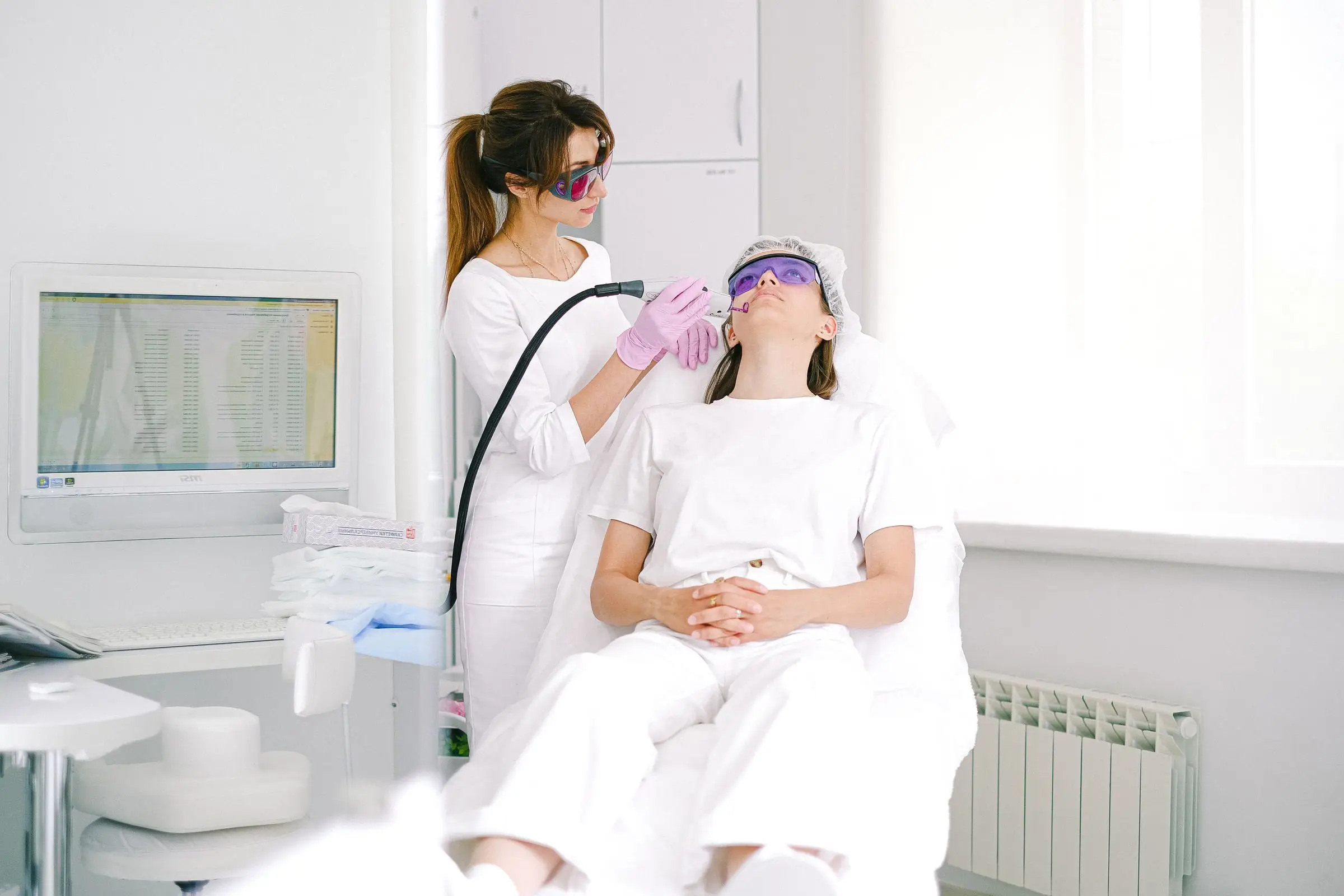
What is IPL, in one honest paragraph?
Intense pulsed light: flashes of broad-spectrum light delivered into the skin, with filters and settings that decide which pigments absorb the energy. Darker spots and visible vessels carry more pigment than the skin around them, so they absorb more of the light. That selective absorption is the entire working principle; everything else is settings.
What kinds of marks respond?
Broadly, two families: brown and red. Sun-related spots and patchy, uneven tone sit in the brown family; visible small vessels and persistent flushing sit in the red. Which of your marks belong to which family, and whether they are the kind that responds to light at all, is read in person, because marks that look similar on the surface can have different origins underneath.
What does it not do?
It does not resurface texture, it does not treat hair in the way our hair-removal laser does, and it does not change what your skin will do next summer. Some pigment types are not suited to light-based care at all. That is a candidacy question we settle at assessment, not after three sessions. If texture is your main concern, microneedling is usually the more relevant conversation.
Why do settings depend on my skin tone?
Because your skin has pigment too. The energy must be tuned so the marks absorb it while the surrounding skin stays comfortable: the deeper the skin tone, the narrower that window, and the more the choice of settings matters. This is why IPL at S.D. begins with tone assessment rather than a default program, and why recent tanning can postpone a session.
What do sessions cost?
By area, per session: $100 for an individual spot, $300 for a targeted area, $500 for the full face, $600 for face and neck or neck and chest. The full list is on our pricing page. Whether IPL is the right tool for your marks is decided first. The consultation is $75, credited to any treatment you complete within 30 days.