
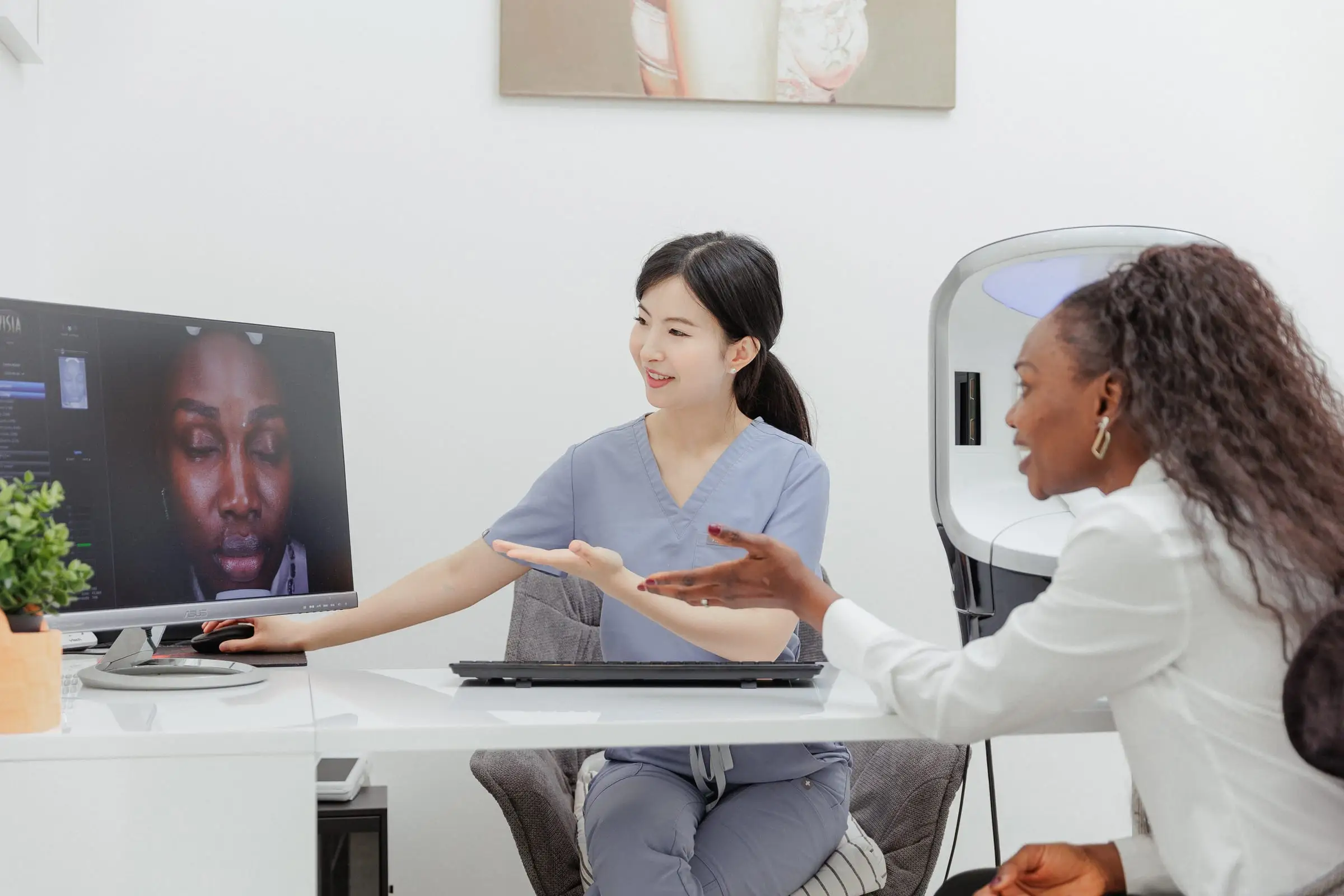
What is VISIA, plainly?
A standardized imaging setup: the same position, the same controlled lighting, every time. That consistency is the point. Skin seen in a bathroom mirror changes with every lamp and every hour of the day; standardized images let the same face be compared honestly with itself.
What does it actually show?
Surface patterns photographed consistently (texture, pores, visible spots) and, under specific lighting modes, pigment patterns that sit below what ordinary light shows you. Seeing sun-related pigment before it fully surfaces is the classic example: useful context for planning light-based care and sun habits.
What can it not do?
It cannot diagnose, it cannot predict how your skin will respond to any treatment, and it does not decide anything. A high or low number on a report is not a verdict on your face. We treat it as one input among several: your history, your priorities and the clinical look matter more.
Why do we use it at consultations, then?
Because a shared picture makes a better conversation: pointing at the same image beats describing it. VISIA belongs to the medical aesthetic pathway. The images record your skin before a treatment begins, and give your nurse a fixed reference to compare against at a later in-person assessment. That comparison is clinical work between you and your nurse; it is not material we publish. Basic facials and body massage do not involve a consultation or VISIA.
The context it belongs in.
VISIA is part of the consultation, not a product: the consultation is $75, credited to any treatment you complete within 30 days, in English, Mandarin or Cantonese. The reading of the images, and of you, is done in person by a Registered Practical Nurse.